
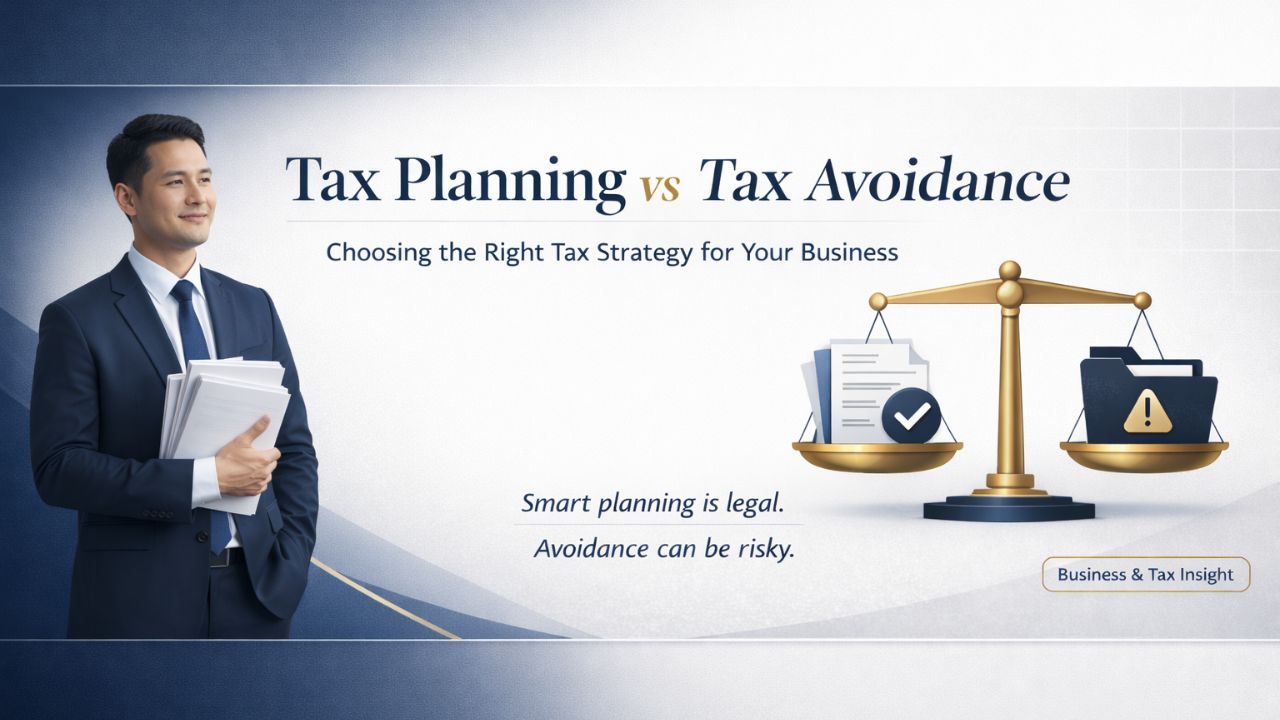
Although both concepts are associated with reducing tax costs, they differ fundamentally in legal standing, risk exposure, and long-term impact on a company’s operations and reputation. Understanding these differences is essential for making responsible and sustainable tax decisions. What Is Tax Planning? Tax planning is a legitimate and structured approach to managing tax obligations in line with applicable laws and regulations. Its primary objective is to achieve tax efficiency while maintaining full compliance with tax authorities.
Rather than focusing on loopholes, tax planning emphasizes strategic decision-making based on existing regulations and incentives.
Common tax planning practices include:
- Leveraging government-approved tax incentives and exemptions
- Structuring transactions with clear commercial purpose
- Managing the timing of income and expenses within regulatory limits
- Ensuring accurate reporting and documentation
- Applying investment-related tax incentives provided by the government
- Calculating asset depreciation in accordance with tax rules
- Designing employee remuneration packages that are tax-efficient
- Choosing a business structure aligned with operational needs
Unlike tax evasion, tax avoidance does not involve illegal concealment. However, it still presents significant legal, financial, and reputational risks. Common Forms of Tax Avoidance
- Creating transactions that exist solely for tax benefits
- Shifting profits to jurisdictions with lower tax rates without economic justification
- Applying aggressive transfer pricing methods
- Using complex corporate structures with limited business rationale
| Aspect | Tax Planning | Tax Avoidance |
| Legal position | Fully compliant with tax laws | Operates in regulatory grey areas |
| Approach | Transparent and structured | Aggressive and technical |
| Risk exposure | Relatively low | High |
| Business rationale | Strong commercial substance | Often questionable |
| Reputational impact | Strengthens credibility | May harm corporate image |
| Audit likelihood | Limited | Elevated |
- Increased tax audits and reassessments
- Financial penalties and administrative sanctions
- Lengthy disputes with tax authorities
- Damage to corporate reputation
- Loss of investor and stakeholder confidence
- Providing legal certainty and compliance assurance
- Creating transparent and reliable financial structures
- Minimizing exposure to tax disputes
- Enhancing trust among investors, partners, and regulators
- Monitor changes in tax regulations regularly
- Integrate tax considerations into annual business planning
- Maintain complete and accurate transaction records
- Engage qualified tax professionals
- Conduct periodic internal tax reviews
Tax planning represents a responsible and sustainable strategy, while tax avoidance exposes businesses to uncertainty and potential regulatory challenges.
For companies focused on stable growth and strong governance, tax planning remains the prudent choice. If your organization seeks to optimize its tax position while maintaining compliance, professional tax advisory support can help develop a secure and effective tax planning strategy.